Featured

A Fresh Voice for Agriculture

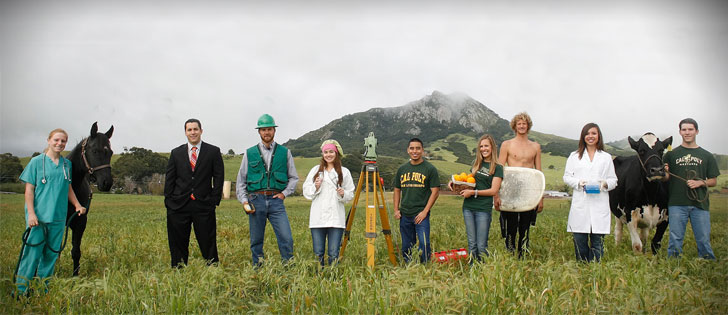
Students within the Cal Poly College of Agriculture can choose from a plethora of opportunities that will lead to innovation in the world of agricultural communications. 

As an agricultural communications student entering into Journalism 205 here at Cal Poly, I was looking forward to learning more about about an industry many people know nothing about. Upon reading the syllabus, I was excited to see a broad list of activities and writing projects such as blogs, press releases, and feature stories. My first impression was that we, as students, will get a taste of potential careers and internships that we could pursue in the future. I grew excited but also nervous as I realized that I will be able to explore these opportunities by being pushed out of my comfort zone. My classmates and I will take on projects that will develop our communication skills that will lead us into our future careers.

When enrolling in this class, I had a few things in mind. I originally planned on taking the class to build a strong foundation in Agricultural Communications for the rest of my time here at Cal Poly. I still intend to follow through with that, but with more of an intention to build both hard skills and soft skills that I can continue to use post-graduation. I switched to agricultural communications from liberal studies as a junior and wanted to solidify that this was the right major for me. Since I’ve moved into the College of Agriculture, I’ve also come to realize the extreme lack of advocacy for agriculture in my generation. I fully intend to improve my communication skills in order to become a strong voice for the agriculture industry by taking criticisms from class projects and learning from them. Through projects such as blogs and press releases I will learn hard skills that are directly applicable in a communications career. My last reason for taking the class, is that I would like to work at a summer internship within the industry. My intention is for Journalism 205 to give me tools and skills I can use to be not only successful, but impressive as an intern. 
Dairy Cows and Their Milk

California Polytechnic State University, San Luis Obispo is fortunate enough to have a large variety of agriculture units conveniently located right on campus. These agriculture units allow students to have a hands-on experience in everything from animals such as pigs and cows, to meat processing and food safety. The units employ students as early as their freshman year, and allow them to gain hands-on experience while still in college.

I decided to dive a little deeper into the dairy unit, one of the largest agriculture units and the closest to the heart of campus. The dairy produces milk, cheese, and ice cream that are sold on campus. It is heavily staffed by students who do a variety of jobs. Some of these jobs include feeding and milking. Students also have the opportunity to take part in an enterprise that allows them to be there and assist with a live birth of a calf! Students within the dairy science major are devoted to keeping the dairy running as efficiently as possible.

When Cal Poly junior Chandler Hall was asked to tell a little about the dairy unit she said: “We all rely on each other to get everything done in a timely manner. That has taught me a lot about how the dairy industry works as a community.” Hall is a milker at the dairy and loves her job. She has gained years of experience while attending school. The unit has provided her with skills that put her above other job applicants for post-grad jobs.

How to Make Popcorn

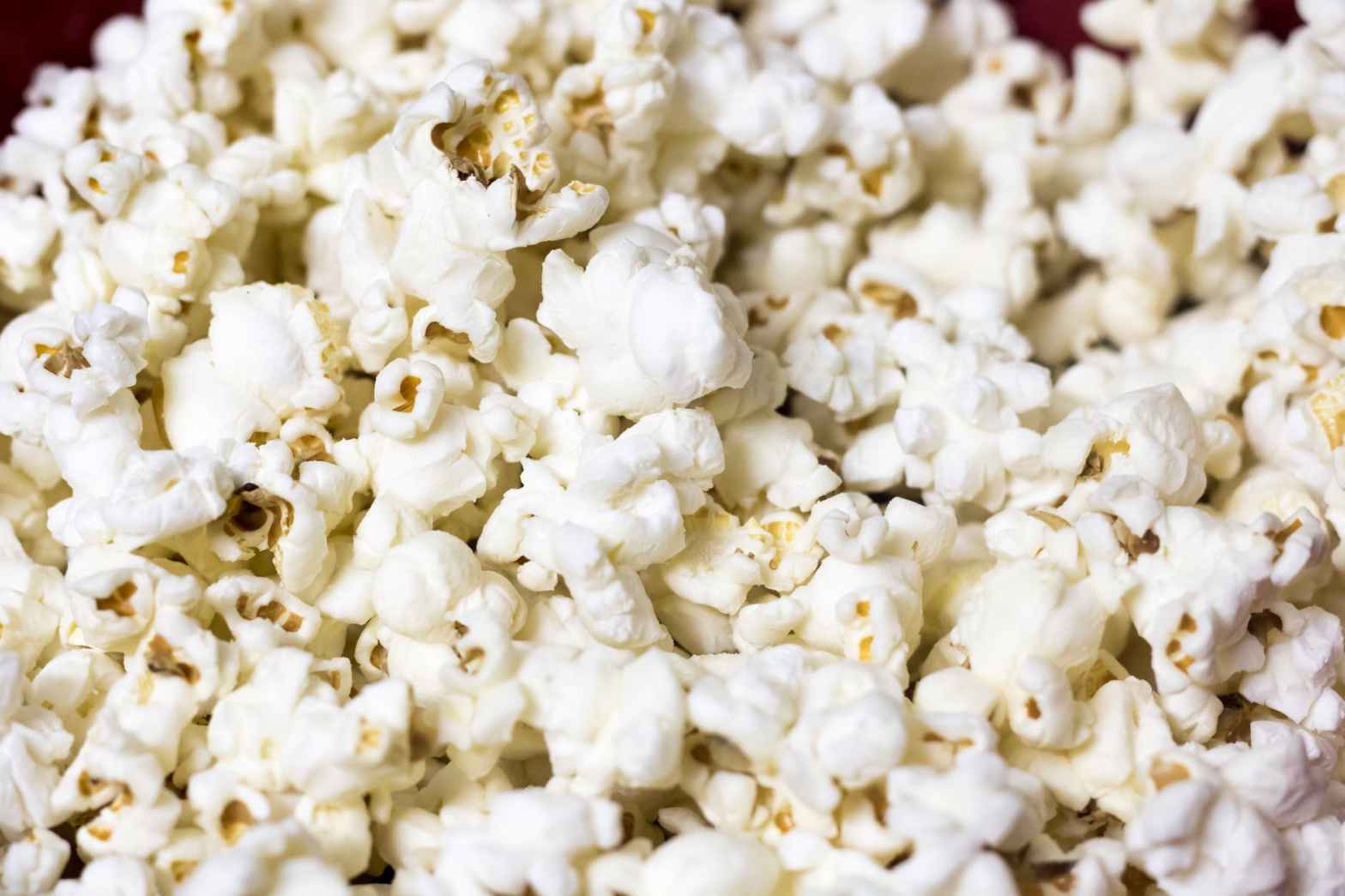
Whenever I am asked what my favorite food is, I immediately answer with popcorn! Ever since I was little both my mom and I loved Orville Redenbacher’s movie theater butter popcorn. While it’s been 17 years since I started eating it, I still love it just as much as I did originally. 

Even though I am in college now, I still enjoy movie theater butter popcorn pretty much every day. You may be wondering how I do this. I start by finding the box in the pantry and opening it up. Then I pull out one of the brown bags and take it out of it’s plastic wrapping. After throwing the plastic away, I put the bag in the microwave. By pressing the popcorn button three times, the time is set for the correct bag size. I always make sure this is correct because nobody likes burnt popcorn or the smell that comes with it. After pressing start, I wait just a few minutes until the microwave starts beeping. I allow a few seconds to make sure the popcorn is done popping before pulling the bag out. I then open it up and take in the smell of freshly popped popcorn. Since the bag is greasy, I pour the hot popcorn into a small bowl. I toss out the bag and dive into my favorite salty snack. Popcorn never disappoints!

Only 4,172 Students are Enrolled at One of the Largest Agricultural Universities Nationwide

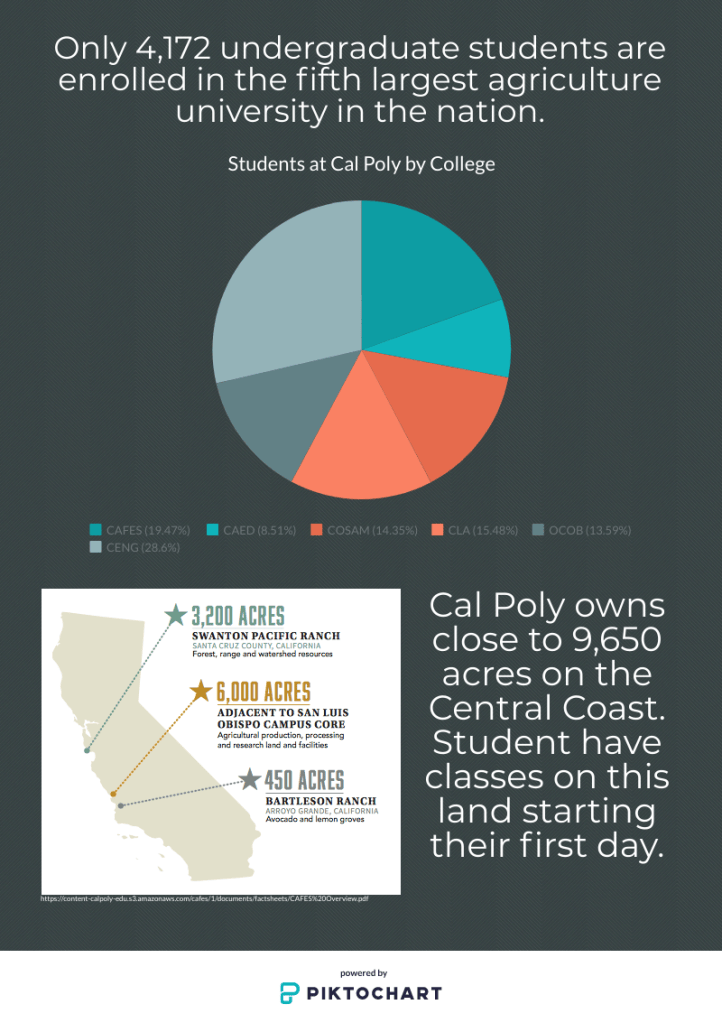
Only 4,172 undergraduate students are enrolled in agriculture programs at California Polytechnic State University, San Luis Obispo. The university is the fifth largest for agriculture in the nation. It brings up the shocking fact that less than 2 percent of our nation is involved in agriculture. The entire population of the United States relies on agriculture whether they realize it or not. The pressure is on this limited number of students to not on keep the agriculture industry alive, but to provide for the rest of the United States as well.

The university is extremely successful in putting into practice its “Learn By Doing” motto. The College of Agriculture, Food and Environmental Sciences teaches classes across 9,650 acres on the California central coast. These 4,172 students are in labs starting on their first day at Cal Poly. These labs teach them hands-on skills that they go on to use in future career paths. Most people think of agriculture as crop farming or growing vegetables. However, the land owned by Cal Poly also teaches labs about everything from water and irrigation to global land management. Of this land, 6,000 acres are located directly around Cal Poly’s campus. This land is available for students to access at any time. It also houses multiple state-of-the-art facilities. All students in the agriculture programs have access to these labs and experiences. 

Even with the small amount of students, the university is known state-wide as one of the top, if not the top, agriculture school. The average salary for these students is around $46K right out of college. Even though to program is one of the smallest on campus, it shows just how close knit the agriculture industry is. Professors, interns, and students work side-by-side everyday to keep the agriculture industry afloat. The College of Agriculture, Food and Environmental Sciences works every day to develop those 4,172 students into employees who will demonstrate leadership and success in their careers post-graduation. 

Tractors and Their Parts

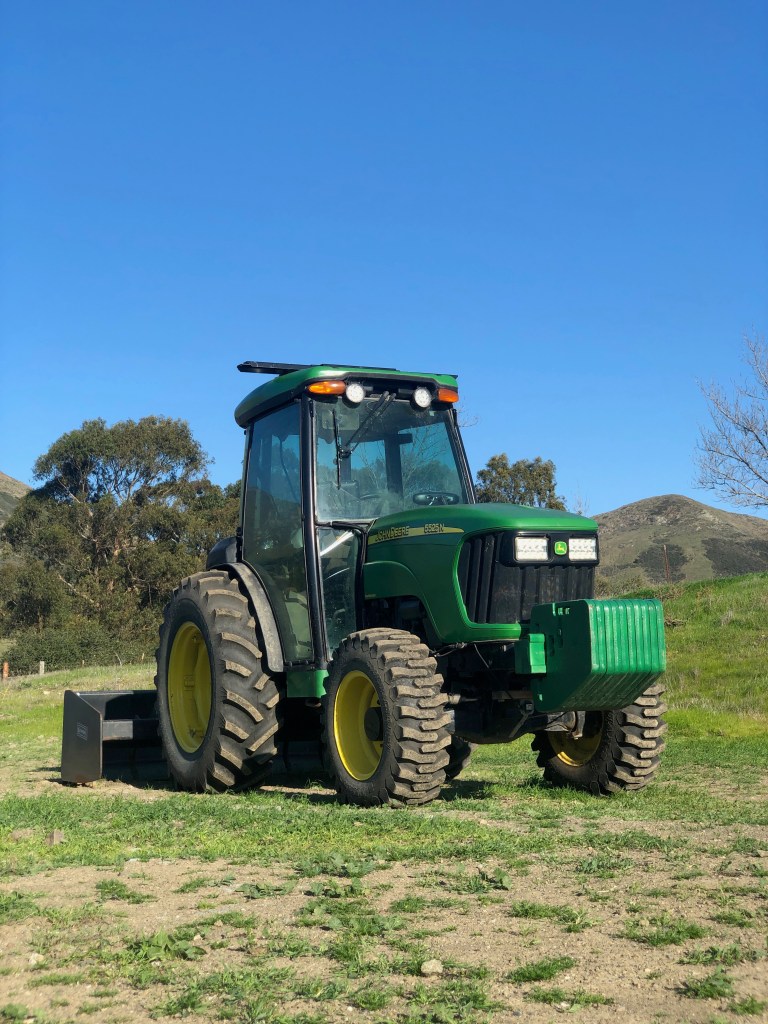
This John Deere my favorite to drive in class. It was the model that we labeled and used for our midterm and final.

In fall quarter of 2019, I enrolled in BRAE 141 (Agricultural Machinery Safety). This class entailed learning about mechanics, engine anatomy and how to drive a tractor. I hadn’t driven a tractor in a long time and starting out, I honestly had no idea how they worked. This class taught me not only how to drive tractors, but it also dove into what the various parts of the tractor were doing while it was being used.

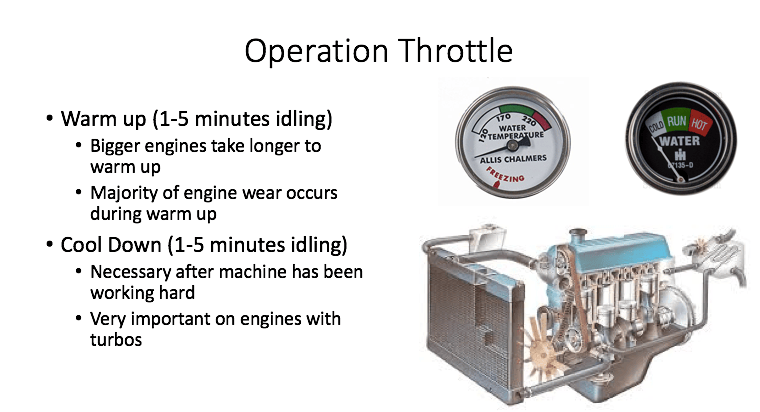
A detailed slides we went over in class concentrating on the throttle. (Forbes Fall 2019)

The lecture for this class encompassed a lot of heavy information. I had no prior knowledge about engines in cars, let alone tractors. It was much more complex than I thought. By the end of class I had a much deeper respect for farmers and mechanics. The machines we used were not only expensive to fix, but they were also complex. The lecture also taught me about using proper safety precautions when around the heavy machinery.

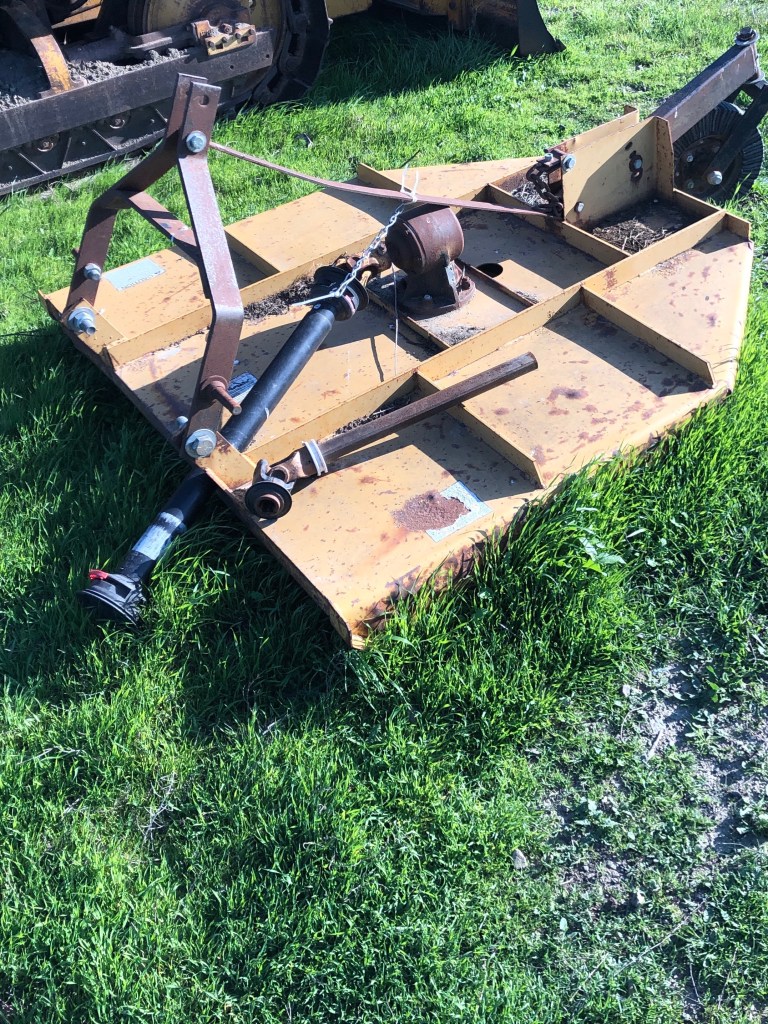
Here is an example of one of the implements we learned how to connect and operate during the lab.

The lab was definitely my favorite part of the class. In lab I was taught about all the different parts and tools farmer use daily to take care of their land. We used a variety of implements including rippers, plows and boxes. There was also a large selection of tractor types that we got to drive. Our professor was even able to get a tractor worth over $400,000. It was huge and pretty much drove itself via GPS. This lab was completely hands-on. It was scary at first, but I can now say it was one of the best experiences of my college career.

Introduce Yourself (Example Post)

This is an example post, originally published as part of Blogging University. Enroll in one of our ten programs, and start your blog right.

You’re going to publish a post today. Don’t worry about how your blog looks. Don’t worry if you haven’t given it a name yet, or you’re feeling overwhelmed. Just click the “New Post” button, and tell us why you’re here.

Why do this?

  • Because it gives new readers context. What are you about? Why should they read your blog?
  • Because it will help you focus you own ideas about your blog and what you’d like to do with it.

The post can be short or long, a personal intro to your life or a bloggy mission statement, a manifesto for the future or a simple outline of your the types of things you hope to publish.

To help you get started, here are a few questions:

  • Why are you blogging publicly, rather than keeping a personal journal?
  • What topics do you think you’ll write about?
  • Who would you love to connect with via your blog?
  • If you blog successfully throughout the next year, what would you hope to have accomplished?

You’re not locked into any of this; one of the wonderful things about blogs is how they constantly evolve as we learn, grow, and interact with one another — but it’s good to know where and why you started, and articulating your goals may just give you a few other post ideas.

Can’t think how to get started? Just write the first thing that pops into your head. Anne Lamott, author of a book on writing we love, says that you need to give yourself permission to write a “crappy first draft”. Anne makes a great point — just start writing, and worry about editing it later.

When you’re ready to publish, give your post three to five tags that describe your blog’s focus — writing, photography, fiction, parenting, food, cars, movies, sports, whatever. These tags will help others who care about your topics find you in the Reader. Make sure one of the tags is “zerotohero,” so other new bloggers can find you, too.

Design a site like this with WordPress.com
Get started